Net-zero emissions mean balancing the greenhouse gases (GHGs) we release into the atmosphere with the amount we remove. To achieve this, we must actively reduce emissions while also enhancing methods that pull carbon out of the air. In this article, we explore what net-zero emissions truly involve and how we can reach this critical goal.
 Source: Kubota stories
Understanding Net Zero Emissions
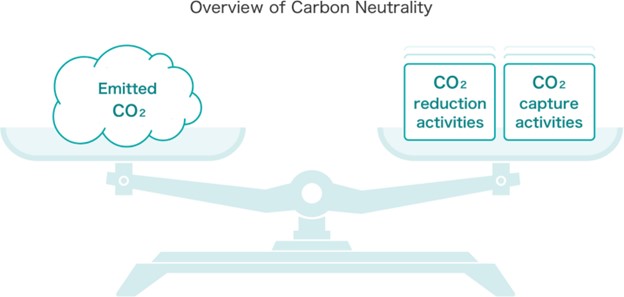
Think about your personal budget: you have money coming in from your job and other sources, and you have expenses going out for various things like rent, groceries, and entertainment. To maintain a balanced budget, you want to ensure that your income covers your expenses. If you’re spending more than you’re earning, then debt is inevitable.
Being net zero emission in terms of environmental impact is similar to the illustration above. Instead of money, we’re dealing with greenhouse gas emissions. Just like income and expenses in a budget, there’s an “income” of emissions being released into the atmosphere from activities like driving cars and using electricity. On the other hand, there’s an “expense” of emissions being removed or offset through processes like planting trees or using carbon capture technology.
When do we need to reach Net Zero?
According to the Paris Agreement by countries, the ideal limit for global warming is 1.5 degrees Celsius. So regardless of the operations carried out, it is not expected that this limit should be exceeded in order to keep the planet safe. Presently we are at 1.1 degrees Celsius and we are seeing some not-so-great things happening, like ice melting and extreme heat waves. So, to keep things in check, we need to manage the “temperature” of the planet. The way we do this is by reducing the greenhouse gas emissions we release into the air, and that’s where net zero emission comes in.
 Source: Stellantis
Is the World on Track to Reach Net-Zero Emissions on Time?
Sadly, the world is not on track to achieve this great feat in time. Even as the world works toward net zero emissions, many people still don’t understand global warming or how their daily actions contribute to it. Progress is happening, but far too slowly. The UN warns that current climate policies could lead to a 2.8°C temperature rise by the end of the century.
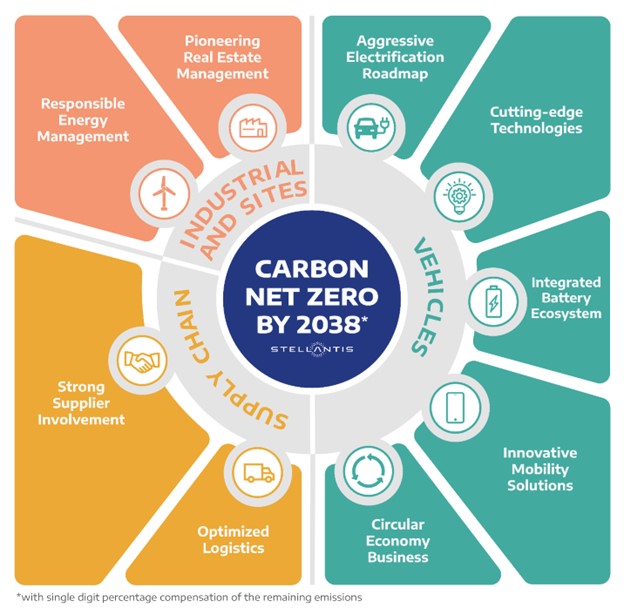
The train for achieving global net zero emission is moving progressively and more and more countries are getting on it. The first country to set a net zero emission target was Bhutan in 2015, and now over 80 countries have keyed into this, including China, the United States, and India.
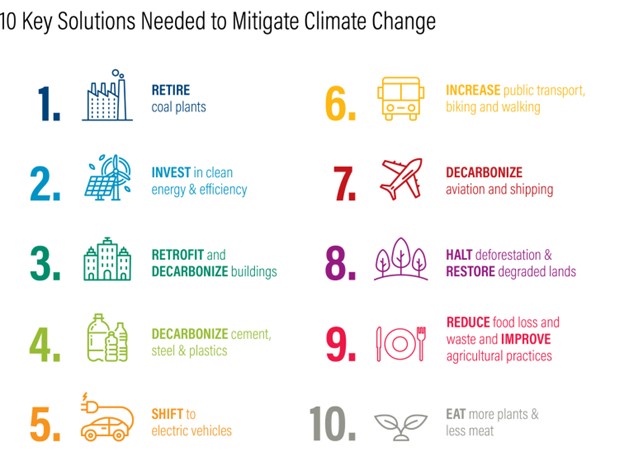
Methods through which different countries are setting up to enable hitting these targets include setting long-term GHG emissions development strategies, and putting domestic laws against deliberate and indiscriminate pollution of the environment that leads to emissions of GHG. It won’t be long before every country on earth jumps on this moving net zero emission train.
 Source: IPCC AR6.
Conclusion
Start building a greener, faster, and more responsible site today – explore our Green Web Tool.